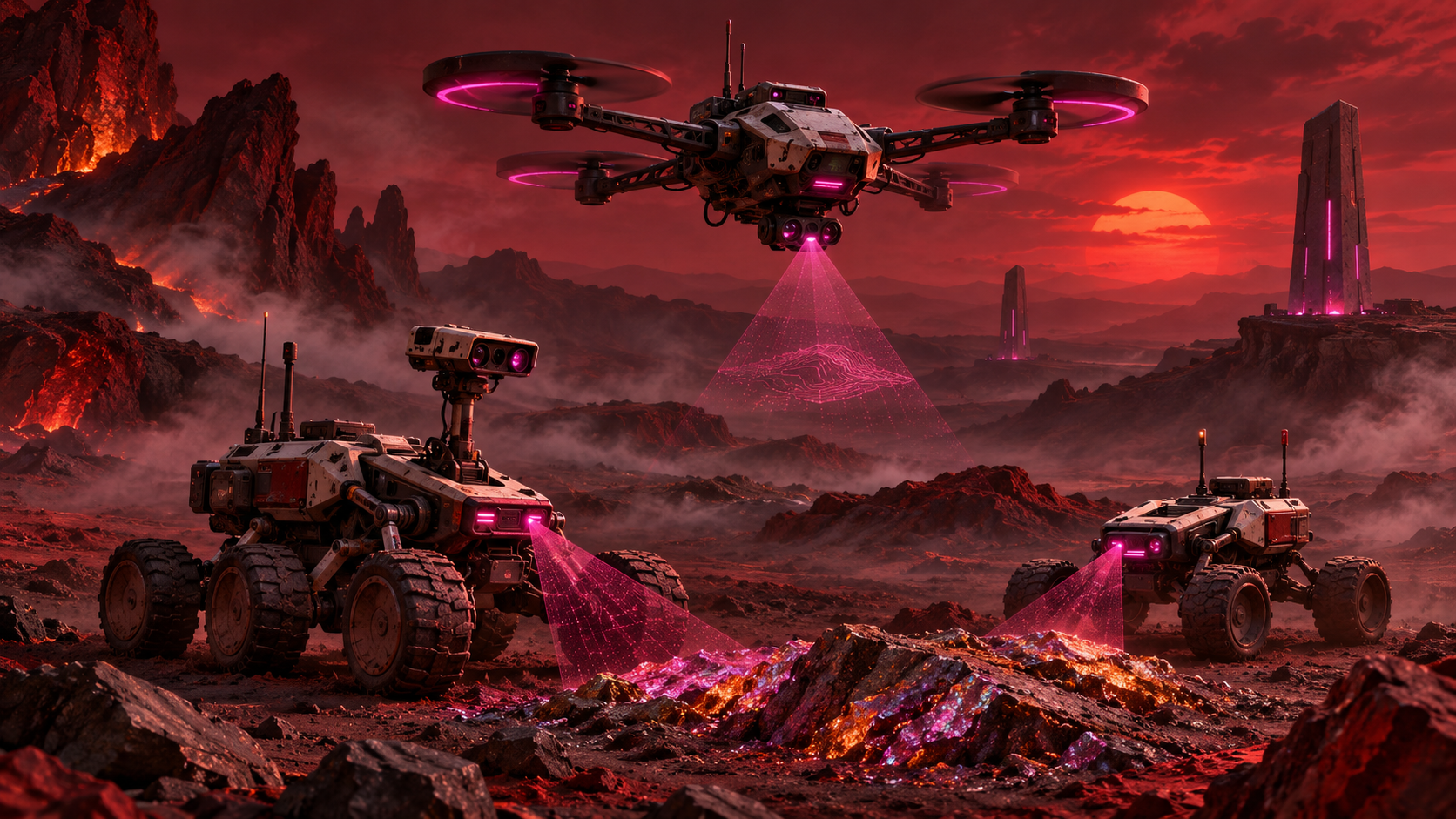
NASA has reported field tests of ASTRA, an autonomous decision-making system for future science missions. In July 2026, a drone and two rovers worked together as a small scientific team.
What the experiment showed
The drone selected an area of interest from an initial science goal, while the software weighed risk, scientific value and available resources. The system then assigned the task to the best-suited robot, monitored hazards and updated the plan as new information arrived.
When the drone found an additional point of interest, the fleet did not abandon its current task. It paused to assess the opportunity and brought in another robotic asset to investigate. That is a move beyond fixed routes toward autonomous science planning.
Why it matters for the Moon and Mars
NASA is exploring this architecture for situations where people cannot provide real-time instructions — including distant planets and hazardous regions of the Moon and Mars. The system must consider distance and speed, but also scientific priority, risk and the mission team’s preferences.
The field test does not mean an autonomous science team is ready to launch on another planet. It does show a practical model in which AI extends a researcher’s reach when communication delays make manual control too slow.